
Baihe Straw Plait

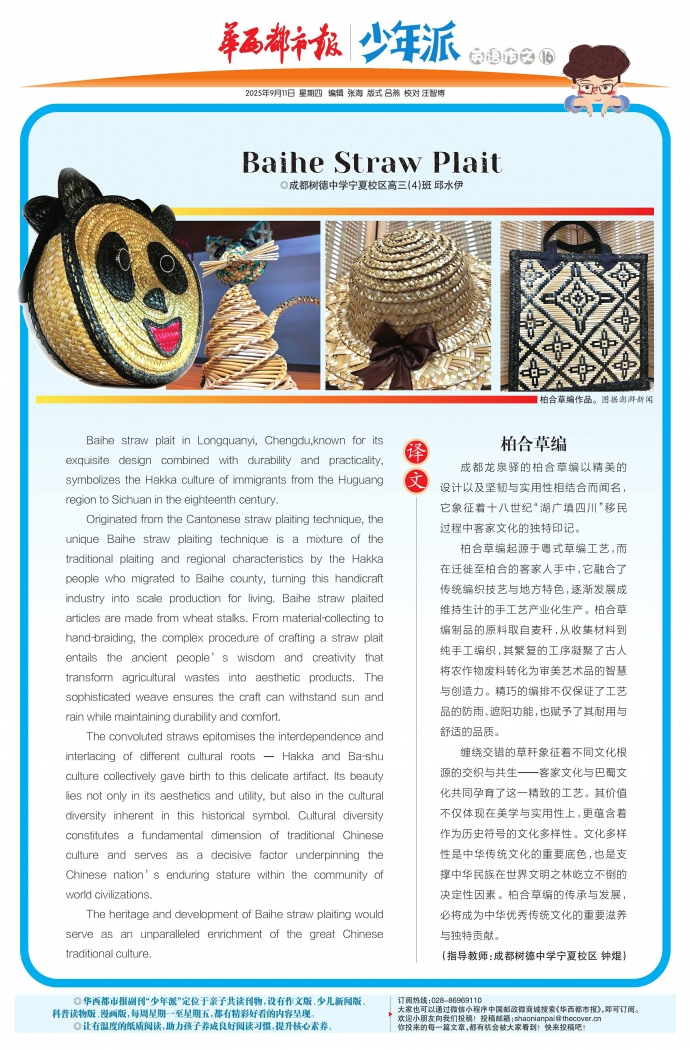
柏合草编作品。图据澎湃新闻


◎成都树德中学宁夏校区高三(4)班 邱水伊
Baihe straw plait in Longquanyi, Chengdu,known for its exquisite design combined with durability and practicality, symbolizes the Hakka culture of immigrants from the Huguang region to Sichuan in the eighteenth century.
Originated from the Cantonese straw plaiting technique, the unique Baihe straw plaiting technique is a mixture of the traditional plaiting and regional characteristics by the Hakka people who migrated to Baihe county, turning this handicraft industry into scale production for living. Baihe straw plaited articles are made from wheat stalks. From material-collecting to hand-braiding, the complex procedure of crafting a straw plait entails the ancient people’s wisdom and creativity that transform agricultural wastes into aesthetic products. The sophisticated weave ensures the craft can withstand sun and rain while maintaining durability and comfort.
The convoluted straws epitomises the interdependence and interlacing of different cultural roots — Hakka and Ba-shu culture collectively gave birth to this delicate artifact. Its beauty lies not only in its aesthetics and utility, but also in the cultural diversity inherent in this historical symbol. Cultural diversity constitutes a fundamental dimension of traditional Chinese culture and serves as a decisive factor underpinning the Chinese nation’s enduring stature within the community of world civilizations.
The heritage and development of Baihe straw plaiting would serve as an unparalleled enrichment of the great Chinese traditional culture.
译文
柏合草编
成都龙泉驿的柏合草编以精美的设计以及坚韧与实用性相结合而闻名,它象征着十八世纪“湖广填四川”移民过程中客家文化的独特印记。
柏合草编起源于粤式草编工艺,而在迁徙至柏合的客家人手中,它融合了传统编织技艺与地方特色,逐渐发展成维持生计的手工艺产业化生产。柏合草编制品的原料取自麦秆,从收集材料到纯手工编织,其繁复的工序凝聚了古人将农作物废料转化为审美艺术品的智慧与创造力。精巧的编排不仅保证了工艺品的防雨、遮阳功能,也赋予了其耐用与舒适的品质。
缠绕交错的草秆象征着不同文化根源的交织与共生——客家文化与巴蜀文化共同孕育了这一精致的工艺。其价值不仅体现在美学与实用性上,更蕴含着作为历史符号的文化多样性。文化多样性是中华传统文化的重要底色,也是支撑中华民族在世界文明之林屹立不倒的决定性因素。柏合草编的传承与发展,必将成为中华优秀传统文化的重要滋养与独特贡献。(指导教师:成都树德中学宁夏校区钟焜)